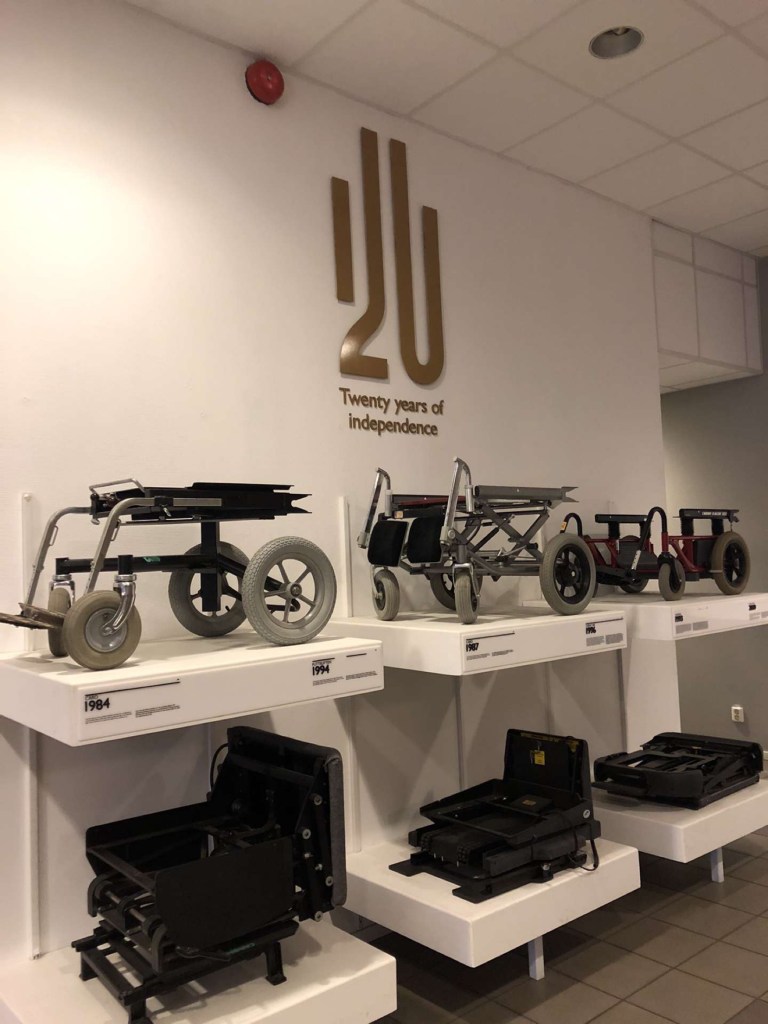
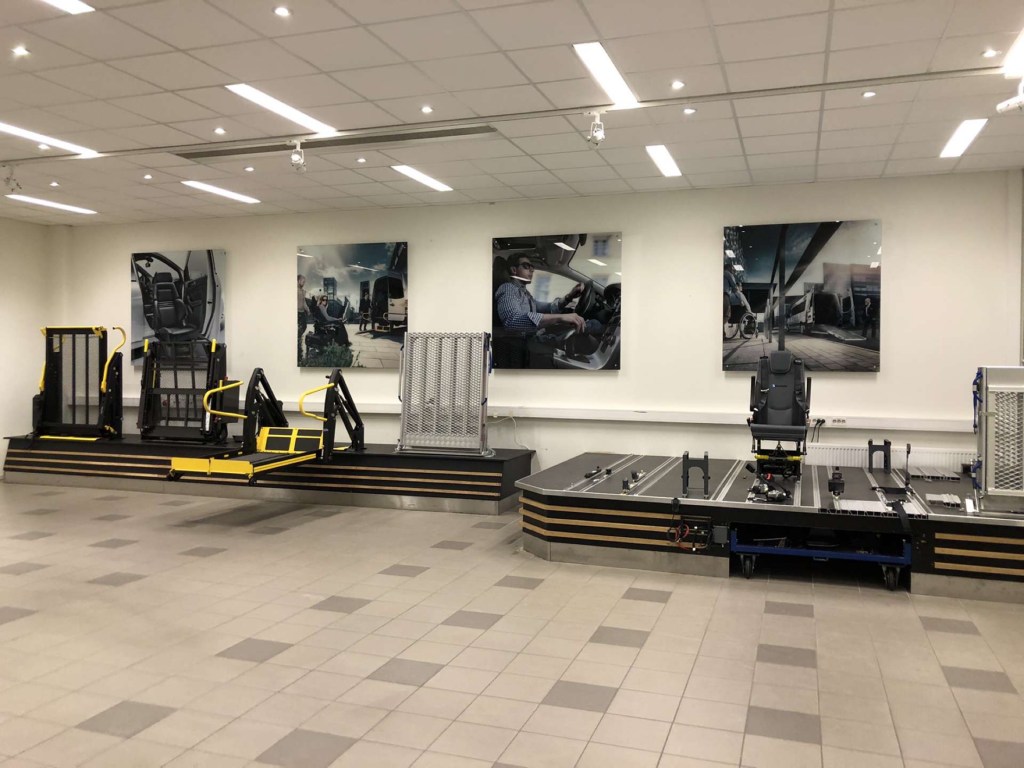
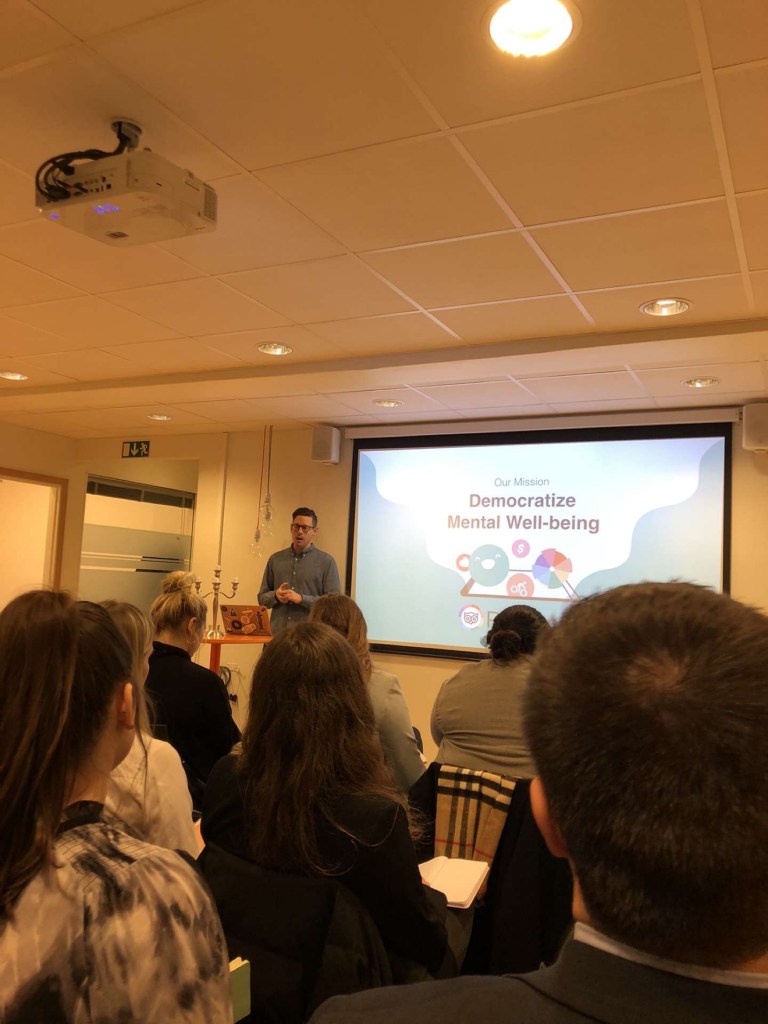
Today we visited BraunAbility, what is formerly known as AutoAdapt, and we were able to see the great changes they make in peoples lives everyday. In 1996, AutoAdapt was founded as an adaptation workshop and in 2007 the company moved from its original facility to a new one. In 2019, AutoAdapt became known as BraunAbility and there are currently around 200 employees in just their European offices all together. At BraunAbility they do everything from the idea to the finished product, which includes R&D, manufacturing, supply chain, marketing, sales, adaptation, and support organization such as HR, finance, and IT.The different products that BraunAbility makes are called getting seated, hoisting and stowing, independent driving, wheelchair lifts, and floors, restraints, and seats. In the prior year trips they have not been able to meet with an engineer here at BraunAbility, but today we were able to and his name was Hasse Slungare. Hasse is a Design Engineer here at BraunAbility and he went through why it is so important that every single part they make is made absolutely perfect because the outcome would be scary. He gave an exercise to complete and it consisted of trying to rip 5 different pieces of paper apart and each of them had different small cuts in them that made them off-balance. The bad outcome if these parts were not made perfectly could be a passenger that is in an adapted seat flying forward in a crash because the parts had faults. The way they fixed this problem was decreasing the angle that the seat is on by 4 degrees to allow the chair to sit on a slight slant. Another big thing that BraunAbility has is many patents for their parts and products. Just on their getting seated product alone there are four patents.It was really interesting here at BraunAbility because we were able to see them actually working on the cars and putting in their products. Some facts that we learned today were that if you have a kid that is disabled and is in need of assistance in a car, then the government pays for that products to be put into the car and that goes up to age 65. The government will also help pay for a larger car to allow the chair to be put into it. The companies mission is: devoted to make life a moving experience for all, and their vision is: to shape the future of global mobility transportation solutions changing the lives of people living with mobility challenges and those who care for them. Today we also visited Remente, an app producer focusing on increasing mental well-being. Their mission is to democratize mental well-being and the name came from the Latin meaning on -mente, which means mind, so Remente means going back to the mind. Before their app production they were mentally training the best athletes, helped Sweden become World Memory Champions, and pioneered ePsychiatry at Northern Europe’s largest hospital. Due to David’s personal mental health journey, he found that the system was constructed in a way where facilities would only see the patient if things got out of hand, but David’s view point is that the patients should be helped far before things get out of hand to prevent that.
In terms of Remente’s app, the U.S. is their largest consumer by population, they have had 1.6 downloads with about 1,000 users a day, and they launched their app about four years ago.
One thing I took away with me from this company visit was when David said that he once met a Buddhist monk that told him, “Do not believe everything that you think.” I think this is so true because your mind does work in weird ways and is constantly trying to trick you. Remente definitely increased my awareness towards mental health and the fact that we all have something going on, so don’t ever judge a book by its cover!
Daily Reflections:
– The man that won the World Memory Champions, due to Remente’s help, knows 55,000 decimals of pie by remembering objects and using all of the senses
– The #1 cause to sick-leave is mental health
– Mental health costs more than cancer, cardiovascular disease, and diabetes
– 200 million work days are lost per year due to mental health
 Off to Sweden We Go